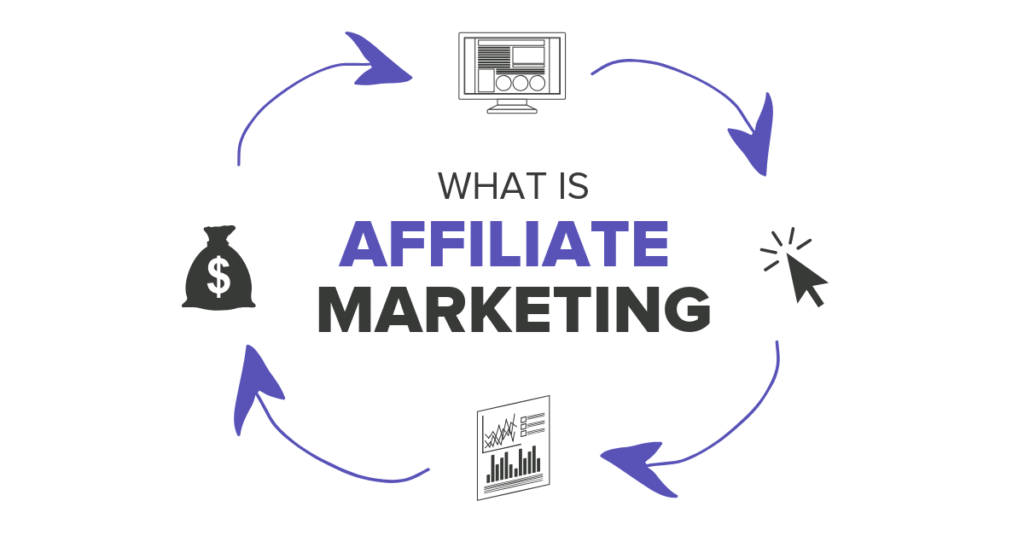
Affiliate Marketing is a performance-based online marketing strategy where a business rewards third-party individuals for driving traffic or sales to its products or services through the affiliate’s own marketing efforts.

Detailed Explanation of Affiliate Marketing :
-
- Merchant (Advertiser/Brand): This is the business or individual that sells a product or service. Examples: Amazon, Flipkart, or a software company like Bluehost or Canva.
- Affiliate (Publisher/Marketer): This is a person or company who promotes the merchant’s products in exchange for a commission. They use their blogs, websites, YouTube channels, social media, or email lists.
- Affiliate Network : Some affiliate programs are managed through a network like ShareASale, CJ Affiliate, or Impact. These networks track traffic, clicks, and commissions between the merchant and the affiliate.
- Customer (Buyer): The person who clicks the affiliate link and makes a purchase. They pay the same price as a regular customer, but the affiliate earns a commission.
Example of Affiliate Marketing:
Let’s say you have a blog about gadgets. You write a review about a Bluetooth speaker and include an affiliate link to Amazon. If someone clicks your link and buys the speaker (or anything else on Amazon during that session), you earn a commission — usually a percentage of the sale.
Types of Affiliate Marketing Models:
-
- Pay Per Sale (PPS): You earn a commission when someone buys a product through your link.
- Pay Per Click (PPC): You earn money just for getting users to click a link, even if they don’t buy.
- Pay Per Lead (PPL): You earn a commission when someone signs up for a free trial, fills out a form, or becomes a lead.

Where Affiliate Marketing is Used:
-
- Blogging & Content Marketing
-
- YouTube and Video Reviews
-
- Email Marketing
-
- Instagram, Facebook, and other Social Media
-
- Coupon & Deal Sites
-
- Product Comparison Sites
Why Is Affiliate Marketing So Popular ?
Low Investment: There is no requirement to manufacture or own things.
Passive Income: Once content is published, it might earn for years.
Scalability: You can market several products in different categories.
Win-win: businesses gain more clients, while affiliates receive commission.
Things to Keep in Mind:
-
Always disclose affiliate links to maintain transparency.
-
SEO and quality content are key to long-term success.
-
Choose relevant and trustworthy products to build audience trust.
-
Understand and comply with the terms and conditions of each affiliate program.
-
Popular Affiliate Programs:
-
Amazon Associates
-
Flipkart Affiliate
-
ClickBank
-
ShareASale
-
CJ Affiliate (Commission Junction)
-
Hostinger/Bluehost/GoDaddy Affiliate
-
Canva Pro Affiliate
-
Udemy Affiliate Program
-